Center for Zoo Animal Welfare
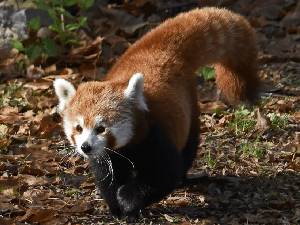
Maternal Care and Juvenile Development in Red Pandas
Red pandas (Ailurus fulgens) are incredibly popular among guests, care staff and scientists alike. However, they are also deceptively challenging to breed. Approximately 25% of cubs may die within their first 30 days, while approximately 35% may die within the first year. As an institution committed to the well-being of this species and to the population management overseen by the Association of Zoos and Aquariums (AZA) Red Panda Species Survival Plan (SSP), we are very interested in better understanding cub development and maternal care. We have partnered with collaborators from the Smithsonian-Mason School of Conservation and members of the Red Panda SSP at Smithsonian’s National Zoo and Conservation Biology Institute to conduct a multi-institutional study of cub rearing and juvenile development. Using infra-red capable cameras installed in maternal nest boxes, we can record 24-hour video to monitor families, particularly during the first six months of life before cubs have become more independent of their mothers. By observing how mothers and cubs interact with each other, benchmarking when cubs reach major developmental milestones and tracking important maternal care behaviors such as maternal proximity and nursing, we can get a better idea of the ways in which we can support the continued growth of a healthy red panda population. At the Detroit Zoo, female red panda Ginger has already been a fantastic mother to cubs Patti and Ponya. We look forward to watching her raise future litters and contribute to our ongoing understanding of red panda maternal care.
See All Other Projects
- 1.A Retrospective Analysis of Polar Bear Cub Growth and Development
- 2.Behavioral and Physiological Development of Polar Bear Cubs
- 3.Behavioral and Physiological Indicators of Welfare in Wyoming Toads
- 4.Behavioral Effects of Visitor Presence on Six Reptile Species
- 5.Denning in Female Polar Bears
- 6.Effects of Cataract Surgery on Crested Penguins
- 7.Exploring and Mitigating Visitor Effects on Reptile Welfare
- 8.Impact of Behavioral Opportunities on Aardvark Welfare
- 9.Impacts of Construction-Related Sound and Vibration on Reptiles
- 10.Impacts of Installing New Habitat Structures on Mammal Welfare
- 11.Implications of Personality in Blanding’s Turtles
- 12.Increasing Space and Habitat Complexity for King Penguin Welfare
- 13.Japanese Giant Salamander Husbandry and Habitat Design
- 14.Monitoring Animal Well-Being Throughout the Opening of Fred and Barbara Erb Discovery Trails
- 15.Penguin Pair Fidelity, Nest Preferences and Egg Production
- 16.Physiological and Behavioral Assessment Tools for Evaluating Gorilla Welfare Throughout Inter-Institutional Transfers
- 17.The Effects of Habitat Complexity on Snake Welfare
- 18.The Impact of Browse on the Welfare of Gorillas
- 19.Using Foraging Ecology to Understand Warthog Habitat Preferences
- 20.Using Infrared Thermography to Understand Gorilla Welfare
- 21.Validating a New Indicator of Welfare for Grizzly Bears
- 22.Validating and Applying a Qualitative Behavioral Assessment Tool Designed for Gorillas
- 23.Visitor Effects on Kangaroos During and After a Covid Zoo Closure
- 24.Welfare Effects of Injuries Obtained in the Wild for Non-Releasable Sandhill Cranes