Center for Zoo Animal Welfare
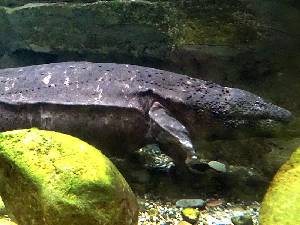
Japanese Giant Salamander Husbandry and Habitat Design
Japanese giant salamanders (Andrias japonicus) are one of the largest species of amphibians in the world. Found in rivers and streams in Japan, these salamanders are highly sedentary and fully aquatic. While we know that complex, appropriately sized and enriching environments that promote the expression of species-appropriate behaviors are associated with positive welfare outcomes for many taxa, amphibians like Japanese giant salamanders are chronically understudied and underrepresented in zoo research. We at CZAW are dedicated to advancing the well-being of understudied taxa, and that includes these amazing salamanders. This study monitored the behavior and space use of five adult Japanese giant salamanders housed at the Detroit Zoo’s National Amphibian Conservation Center (NACC) in relation to husbandry practices and increases in habitat size and complexity. In 2017, the salamanders were moved to a new habitat featuring a substantial increase in space and naturalistic structures. During this process, staff recorded daily husbandry information, like water temperatures and habitat cleaning. In 2022, the habitat underwent minor modifications focusing on cave expansion. Throughout this process, staff conducted assessments of behavior, exposure, social proximity and space use. We found that individuals increased activity and reduced food consumption seasonally, potentially in response to shifts in water temperature or photoperiod. We also found that individuals increased use of the expanded caves and decreased use of shallow nooks and overhangs. These results suggest that subtle changes in salamander environmental conditions, as well as increased space and provision of naturalistic hide structures, can result in positive shifts in appropriate species-specific behavioral indicators of welfare. https://link.springer.com/article/10.1007/s44338-026-00190-2
See All Other Projects
- 1.A Retrospective Analysis of Polar Bear Cub Growth and Development
- 2.Behavioral and Physiological Development of Polar Bear Cubs
- 3.Behavioral and Physiological Indicators of Welfare in Wyoming Toads
- 4.Behavioral Effects of Visitor Presence on Six Reptile Species
- 5.Denning in Female Polar Bears
- 6.Effects of Cataract Surgery on Crested Penguins
- 7.Exploring and Mitigating Visitor Effects on Reptile Welfare
- 8.Impact of Behavioral Opportunities on Aardvark Welfare
- 9.Impacts of Construction-Related Sound and Vibration on Reptiles
- 10.Impacts of Installing New Habitat Structures on Mammal Welfare
- 11.Implications of Personality in Blanding’s Turtles
- 12.Increasing Space and Habitat Complexity for King Penguin Welfare
- 13.Maternal Care and Juvenile Development in Red Pandas
- 14.Monitoring Animal Well-Being Throughout the Opening of Fred and Barbara Erb Discovery Trails
- 15.Penguin Pair Fidelity, Nest Preferences and Egg Production
- 16.Physiological and Behavioral Assessment Tools for Evaluating Gorilla Welfare Throughout Inter-Institutional Transfers
- 17.The Effects of Habitat Complexity on Snake Welfare
- 18.The Impact of Browse on the Welfare of Gorillas
- 19.Using Foraging Ecology to Understand Warthog Habitat Preferences
- 20.Using Infrared Thermography to Understand Gorilla Welfare
- 21.Validating a New Indicator of Welfare for Grizzly Bears
- 22.Validating and Applying a Qualitative Behavioral Assessment Tool Designed for Gorillas
- 23.Visitor Effects on Kangaroos During and After a Covid Zoo Closure
- 24.Welfare Effects of Injuries Obtained in the Wild for Non-Releasable Sandhill Cranes