Center for Zoo Animal Welfare
Penguin Pair Fidelity, Nest Preferences and Egg Production
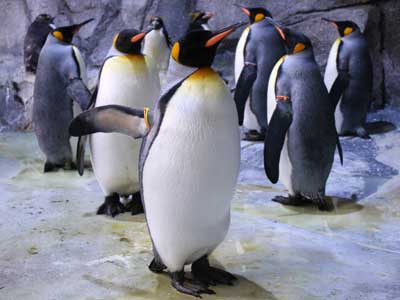
As with many species, it is of the utmost importance that the penguin species overseen by the Association of Zoos and Aquariums (AZA) Penguin Taxon Advisory Group maintain stable, sustainable and genetically diverse populations. This necessitates the production of eggs. However, not every egg laid will be fertile, not every fertile egg will be recommended to hatch (based on genetics) and not every fertile genetically-valuable egg will successfully hatch. In order to understand what contributes to the production and eventual hatching of those genetically-valuable eggs, penguin and animal welfare staff have teamed up to look at 20 years of penguin pairing, nesting and egg production at the Detroit Zoo. In this study, we are specifically focusing on king (Aptenodytes patagonicus), gentoo (Pygoscelis papua papua), macaroni (Eudyptes chrysolophus) and southern rockhopper (Eudyptes chrysocome) penguins residing at the Detroit Zoo between 2005 and 2025. Using historical records, we are examining variables relating to egg production (size and weight, fertility, ultimate outcome of fertile eggs, number of eggs produced) as well as demographic variables relating to the parents (parent age when egg was laid, parent rearing history, nest where the egg was laid, pair fidelity). Pair fidelity, or whether two penguins that pair up during one breeding season pair up again in subsequent breeding seasons, is thought to influence egg fertility. However, pairs that repeatedly do not produce eggs or only infertile eggs may split up in search of more success with other partners. This study will help us better understand how we can support penguins in forming naturalistic long-lasting pair bonds and producing viable eggs.
See All Other Projects
- 1.A Retrospective Analysis of Polar Bear Cub Growth and Development
- 2.Behavioral and Physiological Development of Polar Bear Cubs
- 3.Behavioral and Physiological Indicators of Welfare in Wyoming Toads
- 4.Behavioral Effects of Visitor Presence on Six Reptile Species
- 5.Denning in Female Polar Bears
- 6.Effects of Cataract Surgery on Crested Penguins
- 7.Exploring and Mitigating Visitor Effects on Reptile Welfare
- 8.Impact of Behavioral Opportunities on Aardvark Welfare
- 9.Impacts of Construction-Related Sound and Vibration on Reptiles
- 10.Impacts of Installing New Habitat Structures on Mammal Welfare
- 11.Implications of Personality in Blanding’s Turtles
- 12.Increasing Space and Habitat Complexity for King Penguin Welfare
- 13.Japanese Giant Salamander Husbandry and Habitat Design
- 14.Maternal Care and Juvenile Development in Red Pandas
- 15.Monitoring Animal Well-Being Throughout the Opening of Fred and Barbara Erb Discovery Trails
- 16.Physiological and Behavioral Assessment Tools for Evaluating Gorilla Welfare Throughout Inter-Institutional Transfers
- 17.The Effects of Habitat Complexity on Snake Welfare
- 18.The Impact of Browse on the Welfare of Gorillas
- 19.Using Foraging Ecology to Understand Warthog Habitat Preferences
- 20.Using Infrared Thermography to Understand Gorilla Welfare
- 21.Validating a New Indicator of Welfare for Grizzly Bears
- 22.Validating and Applying a Qualitative Behavioral Assessment Tool Designed for Gorillas
- 23.Visitor Effects on Kangaroos During and After a Covid Zoo Closure
- 24.Welfare Effects of Injuries Obtained in the Wild for Non-Releasable Sandhill Cranes